A.R.T.
ABOUT
The Anxiety Reframe Technique® is an award-winning approach to nervous system recovery
ABOUT A.R.T.
ANXIETY REFRAME TECHNIQUE
Originally developed through work with autistic and neurodivergent people, A.R.T. began as a way of reaching patterns that seemed to sit beneath language, insight and conscious intention. Over time, the same principles proved relevant across anxiety, trauma, neurological conditions, ageing, prolonged illness and high-performance environments.
A.R.T. brings together contemporary neuroscience, Polyvagal Theory, sensory and movement-based work, Integral, developmental and Jungian theory. Its central concern is that early learned, autonomic behaviour can create a limiting internal map and internal pathways - that inform and restrict access to movement, speech, executive ability and deep rest.
Created by Holly Bridges, A.R.T. is described as an internal martial art for the nervous system. The aim is increasing mastery from the inside: greater awareness of state, greater capacity to influence it, and ultimately greater freedom in how we meet the world.

ABOUT HOLLY BRIDGES
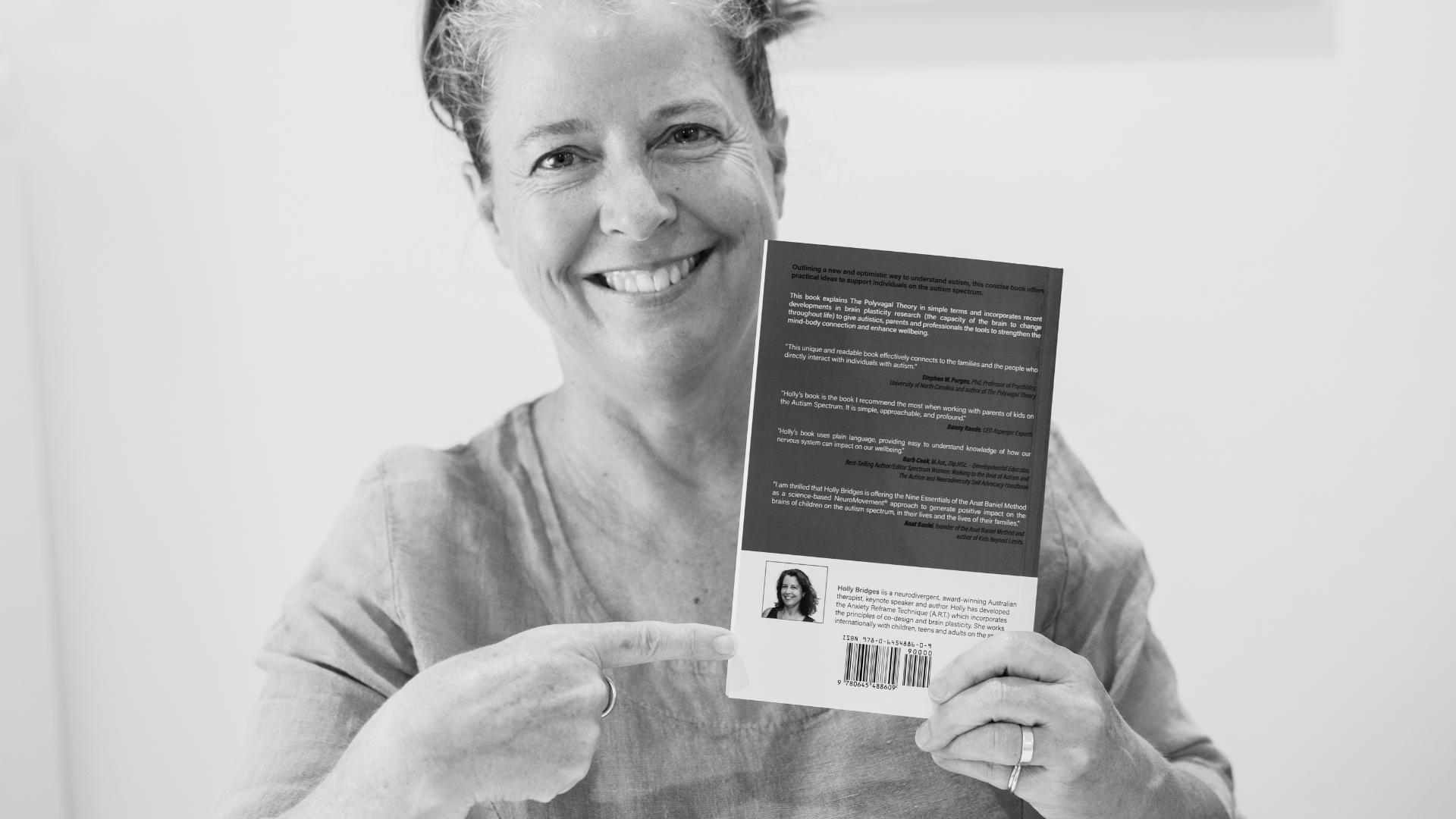
Holly Bridges is an Australian therapist, author and creator of the Anxiety Reframe Technique® (A.R.T.). Her background includes psychology, women’s studies, youth work, disability services and somatic practice, with a long standing interest in the relationship between physiology, behaviour and human potential.
Her early work was strongly influenced by Polyvagal Theory and by approaches that use movement and sensory experience to affect nervous system organisation. This led to her first book, published by Jessica Kingsley Publishers, with a foreword by Prof. Stephen Porges.
Holly later worked extensively in autism services, where she became increasingly interested in the gap between what a person appeared capable of and what they could actually access in a given moment. Speech, movement, initiation, attention, emotional regulation and engagement seemed to shift considerably with different variables, often with little conscious control or awareness.
That observation became central to the development of A.R.T. If these capacities could change, then the underlying physiology could not be entirely fixed. The question became less about the behaviour itself and more about what was happening in the nervous system before the behaviour appeared.
Over the past fifteen years, Holly has developed A.R.T. into a distinct therapeutic framework drawing on neuroscience, Polyvagal Theory, sensory and movement-based approaches, somatic practice, clinical observation and embodied traditions.
The work is grounded in a simple principle: when the autonomic organisation beneath the behaviour changes - what a person can access - can change dramatically.





HOLLY'S WRITING - SUBSTACK
Click on image to go to Substack
WHAT PROFESSIONALS SAY ABOUT A.R.T.
PROFESSOR STEPHEN PORGES
Professor of Psychiatry / Creator of the Polyvagal Theory
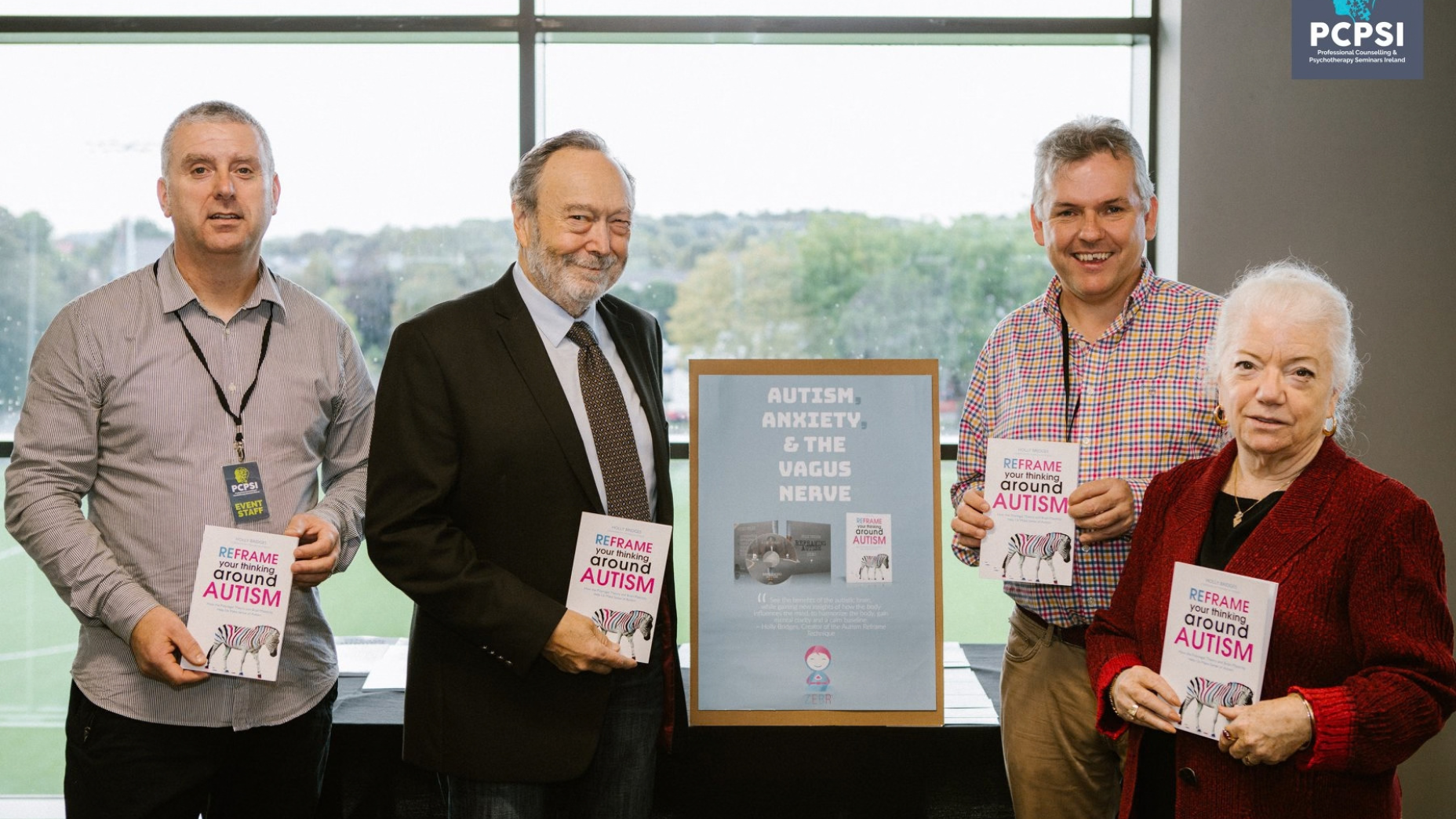
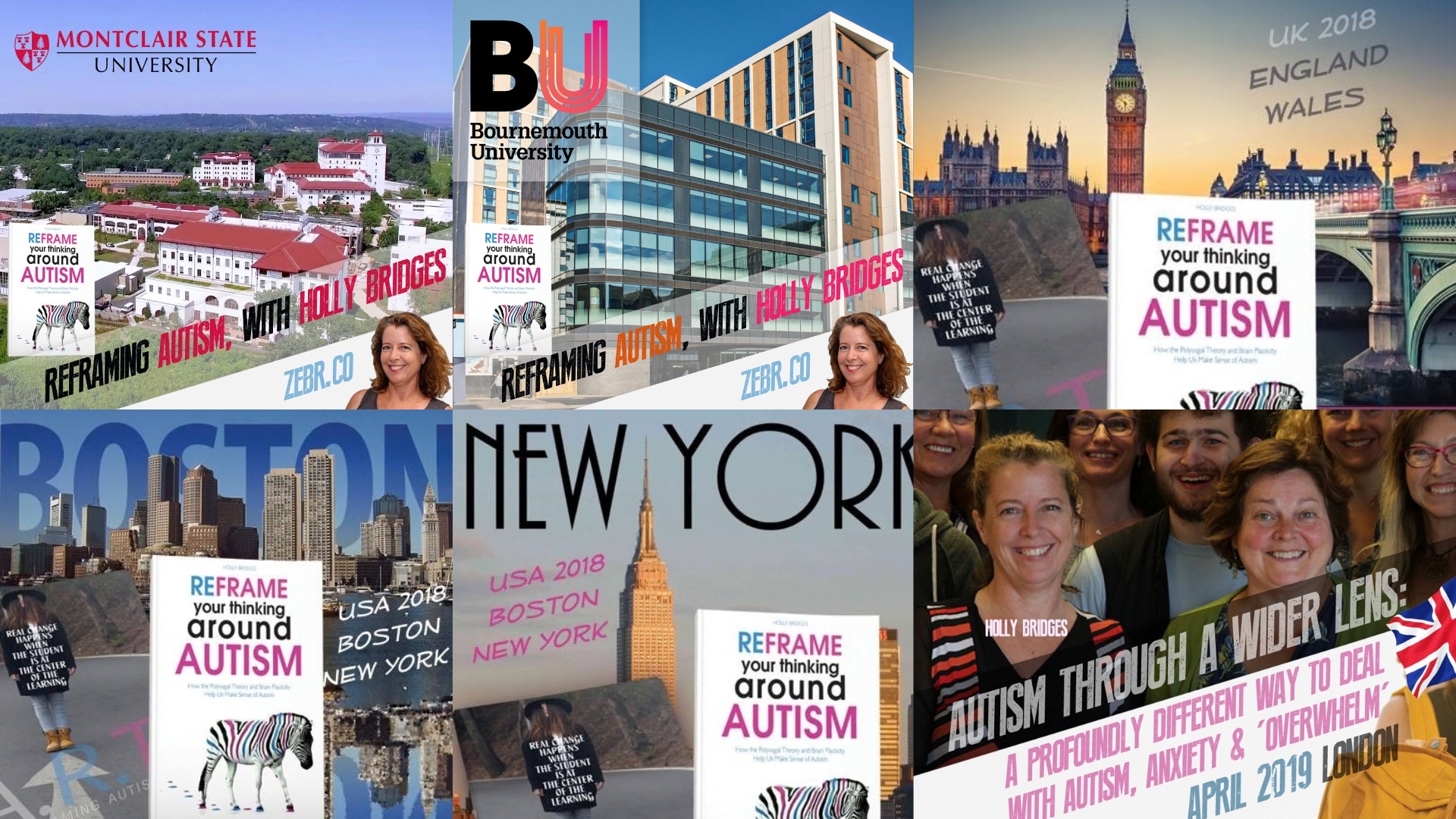
University of North Carolina at Chapel HillI became acquainted with Holly in 2014, when she contacted me to evaluate a prepublication copy of her book, Reframe Your Thinking Around Autism: How the Polyvagal Theory and Brain Plasticity Help Us Make Sense of Autism.
Since I developed Polyvagal Theory, I was curious how she would distill the concepts of theory into an accessible volume that would be helpful to those on the autism spectrum, their families, and the therapists and educators who support them. In reading her book, I realized that Holly had a gifted presentation style that enabled her to communicate the optimistic and important principles of the Polyvagal Theory.
Holly continues to refine her clinical style, embodying aspects of Polyvagal Theory, that enable her to support her clients’ journey to have richer lives and to experience the benefits being safe enough to co-regulate with others.
Focusing on witnessing the client’s biobehavioral state and providing cues of safety through own presence and accessibility, she has successfully expanded the range of the social behavior and resilience.
KANE BLACKMAN
National Disability Service (NDS) Commission Secretary
Holly Bridges’ work has been acknowledged by the Australian government’s disability insurer for ‘Excellence In Innovation’. Ms Bridges won the award for her neuroplasticity work that helps people with disabilities improve their physical and social presentations. Ms Bridges has also been recognised internationally for her book ‘Reframe Your Thinking Around Autism’ which outlines this work.
PROFESSOR TONY ATTWOOD
Clinical psychologist; author of 'Asperger’s Syndrome: A Guide for Parents and Professionals'.
Holly seems to have discovered a new perspective on catatonia and autism.
DR. GERARD COSTA
Former Director, Centre for Autism and Early Childhood Mental Health.
Montclair State University, New Jersey
Holly is an incredible thinker and a sought-after consultant and interventionist with neurodiverse children and families. However her skills as a writer and presenter are extraordinary.
She is warm, engaging and energetic with the capacity to teach about very complex topics in very understandable ways.
One of her special gifts as a presenter is her use of simple line drawings of human and brain/nervous system structures and functions, making the complex interactions come alive, making incredible sense to participants with varying levels of knowledge.
Holly is one of those rare “translators” of science into application and practice. She teaches professionals and families and supports those with developmental difficulties with deep understanding, passion and care.
She is a gift to our work.
DR. SREE THAMBURAJA
Consultant Forensic Psychologist, FRCPsych
As a Forensic Psychiatrist, understanding the impact of trauma has led me down many paths of therapies as treatment modalities. The search for a therapy modality that ‘speaks’ to the body is like the proverbial needle in the haystack. Holly Bridges’ approach via A.R,T is that needle. Over the last 2 years, I have had the opportunity to learn from the Express and ART in-depth program to better understand Holly’s work.
Nothing prepared me for the unexpected way ART works or rather ‘communicates’ with the body. It is an interesting approach combining Neurology principles with Eastern medicine approach that is not only gentle but potent for the nervous system to rediscover its purpose, balance and resilience. As a Psychiatrist, A.R.T exercises and vocabulary has given many patients with chronic mental health issues the much needed ‘exhale’, the words describing their experience living in and with their bodies. A.R.T in many ways is a portable toolkit for clinicians wishing to work with patients in a therapeutically non intrusive way.
DR. MAARTEN AALBEERSE
Somatic Therapist, France
Holly Bridges was among the first who was aware that the Polyvagal model needed to be expanded, in ways Prof. Porges himself now also recognises. I have watched Holly diligently refine and progress her novel therapy with a high degree of integrity over the past seven years.
PROFESSOR EMERITUS TARQUAM MCKENNA
BEd., PGradDipDramaEd, MEd, PGradDipArts, MA (HolyNames), MA (ECowan), PhD, MTESOL
I highly recommend Holly Bridges. Her innovative technique and book have significantly advanced the field. Holly's deep commitment and unique approach make her work both impactful and accessible.
DR. WENDY ALLEN
BSc(Med) MBBS MPH FRACP
Consultant Paediatrician and Paediatric Allergist
Holly delivers her therapy expertly and with immense thought and empathy. Her ability to engage online with extremely sensitive and fragile individuals is to be highly commended.
DR LEKKIE HOPKINS
Feminist academic and grandmother
Holly’s work is astonishingly effective and apparently very simple. The results are extraordinary.
NELLE FRANCES
Autism Therapist | Creator of the Sensory Detective® Program
Holly Bridges offers a new, embodied language for supporting autistic people through trauma, shutdown and deep nervous system overwhelm.
SEJLA MURDOCH
Senior Psychologist, Deputy Director, Australian NeuroFeedback Institute
Ms. Bridges' skilful implementation of Polyvagal Theory in her practice is truly exemplary, demonstrating a rare ability to foster a sense of safety and connection in her clients.
SELA WEAVER
Somatic Psychotherapist
Holly offers something that no one I’ve ever met before has discovered. She has a profound and personal understanding of the embodiment of our threat response to the difficulties and challenges of our lives, and has invented a way to make contact with it.
SUSANN KEATING
Registered Psychologist, General Psychology Services
Holly Bridges’ neurodiverse therapeutic approach, celebrates diversity, tapping into the innate intelligence and helping them to make the most of their gifts.
LOUISE ‘LOU’ GRANT
Counselling Psychologist / Somatic Experiencing Practitioner
Holly’s work aligns with the growing neurobiological evidence that treatment tailored to change occurring in regions of the brain beyond language are potent and enduring. Holly has extended her sphere of influence in the field, with tenacity and integrity.