
Want them to feel
more ease - more confidence - more independence?
Anxiety Reframe Technique
ENROLMENT OPEN
You can see there is more in them
Your child may be bright, funny, capable, determined or deeply perceptive - and still struggle to show what they know or do what they intend.
Speech, movement, initiation, emotional control or confidence may come and go depending on stress, fatigue or demand.
For some, these difficulties are subtle. For others, they affect almost every part of daily life.

When capacity comes and goes
It can be confusing when something is possible one day and unreachable the next.
A child may understand exactly what is being asked, yet their body cannot organise the response. They may freeze, shut down, become overwhelmed, lose words, struggle to start or need far more support than it can look like on the outside.
For some, many things are unattainable.
A.R.T. looks at what is happening with the underlying neurophysiology - and aks what can support real change?


A.R.T. FOUNDATIONS
A gentle, powerful introduction to the Anxiety Reframe Technique
You’ll walk away with practical tools, science you can easily incorporate, and a fresh connection to your own nervous system intelligence.
WHAT'S INCLUDED
6 online modules & accompanying fillable workbooks.
12 live video replays on the practical application of concepts and techniques of Anxiety Reframe Technique (A.R.T.)
6 month access to content
Work at your own pace
Certification Exam - for those who require a certificate, + who wish to proceed to formal accreditation
Fee
$280 USD
COURSE MODULES

1: Setting a New Stage
We step back from labels and look at the whole person. Using Ken Wilber’s Integral Theory, we explore how both you and your child have been shaped by:
- physiology and emotion
- relationships and environment
- culture and life experience
- autism, neurodivergence and mental health frameworks
- the meanings and labels attached to your experiences
The aim is to give you a broader, more respectful way to understand your child — one that recognises both capacity and difficulty, without reducing them to a diagnosis.
Integral Theory / History / Neurodivergence / The Whole Person

2: Polyvagal Theory
We explores the Polyvagal Theory through an A.R.T. lens, with added biology and anatomy to help make sense of:
- stress, overwhelm and shutdown
- meltdowns and sudden loss of access
- shifts in energy and autonomic state
- connection and engagement
- patterns common in autism and neurodivergence
- why behaviour can change even when capacity is still present
The aim is to help you read your child’s autonomic state more clearly and understand what may be happening underneath changes in function, behaviour and access.
Polyvagal Theory / Autonomic States / Autism / Neurodivergence / Shutdown / Wellbeing

3: Brain/Body Circuitry
We explore how the body’s major regulatory systems work together, including the:
- brain
- vestibular system
- immune system
- autonomic nervous system
- limbic system
Through an A.R.T. lens, we look at how shifts across these systems can change an individual's access to movement, attention, regulation, energy and executive function.
These principles can help parents make sense of what can happen for people with autism and neurodivergence, as well as trauma, chronic illness, anxiety and fatigue.
Brain / Body Integration / Vestibular System / Immune System / Limbic System / Executive Function

4: Brain Plasticity
Drawing on Anat Baniel’s Nine Essentials through a neurodivergent lens, this module explores how to create better conditions for learning and change.
You’ll look at how:
- attention supports learning
- variation opens new options
- curiosity changes engagement
- pacing reduces overload
- meaningful experience helps new patterns stick
The focus is on helping you apply the A.R.T. exercises with considered attention.
Neuroplasticity / Nine Essentials / Variation / Attention / State Flexibility / Agency
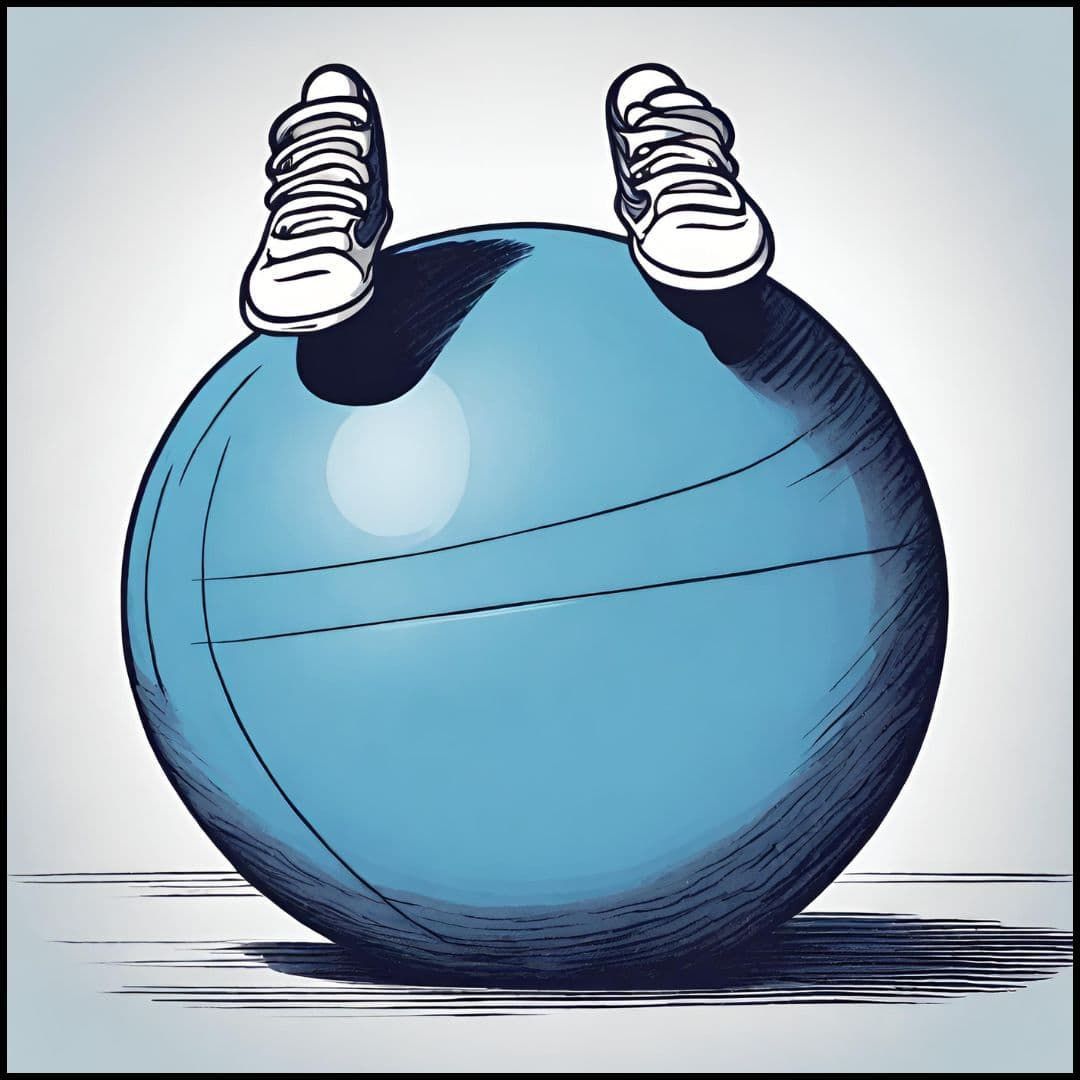
5: Hara Ball Exercise
Here we introduce the Hara Ball Exercise, one of the core practices in A.R.T.
You’ll learn how rhythmic movement and pressure can be used to support:
- body awareness
- autonomic regulation
- state flexibility
- movement and coordination
- greater connection to the body
The focus is on learning how to apply the Hara Ball correctly, recognise when it is most useful, and adapt its use to the individual in front of you.

6: Hara Hand Points
This module explores how the brain maps and organises sensory information, and how this can influence:
- emotion
- body awareness
- autonomic response
- familiar patterns of reaction
You’ll then learn Holly’s A.R.T. Acupressure Hand Points, using targeted sensory input to:
- notice shifts in state
- interrupt familiar physiological patterns
- support a different response
Practical instruction and a real-life case study are included.
Neurosensory Alignment / Sensory Mapping / Interoception / Acupressure / Autonomic Response
Ready to learn the foundations of this new way of working to help yourself and your child?
REVIEWS - WHAT A.R.T CAN DO
Fee Plumley, UK
“After several years of searching for the Holy Grail - somatics trauma therapy through the neurodivergent lens - I was nervously excited to discover Holly's practice earlier this year. Holly guided me through a week-long intensive, which fundamentally shifted both baselines and perspectives, and drastically improved my immediate wellbeing and longer-term self-belief. The experience has been quite literally life changing and I haven't stopped praising both the somatics practices and Holly ever since! I'm very much looking forward to starting her new A.R.T Course so that I can learn even more about the science behind the therapy, and be able to actually share its benefits with others, instead of just raving about them! Holly is an absolute delight to work with, having the envious ability to hold a calming space for challenging moments, while also sharing the more complicated science with a side order of laughter. I cannot recommend her more.”
Katherine Davey, USA
"Holly’s technique offers me a way to harmonize body, mind, and spirit on demand that works for me, in a way that is natural and nourishing for me. It’s play. As I do her exercises, I finally sense and respond effectively to my body telling me how long to spend in any one activity, how many times to do them, how to sequence them, like how I can sense my body telling me it’s thirsty or ready to get up. It’s fun. Her technique does not force my body to do things it doesn’t want to do or force my mind to do things it doesn’t want to do, like override every plea from my body that it’s nearing or past its limits. It’s joy."